
The 'Black Globe Effect' on Humans and Animals
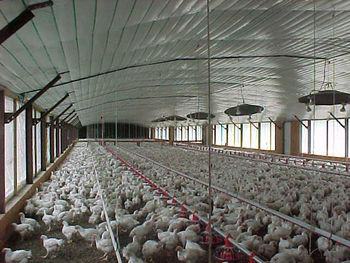
Blocking UV Heat Waves to
Reduce Commodity Costs, Herd Losses
Ultraviolet (UV) radiation harms animals by damaging cellular DNA, suppressing immune systems, and causing painful skin burns and long-term skin cancers.
Animals with thin, light-colored, or sparse fur face the highest risk of injury. UV rays break chemical bonds and create abnormal links in genetic material, leading to cell death or cancerous tumors like squamous cell carcinoma.
Prolonged exposure causes redness, painful scaling, and dry crusty sores on unpigmented areas. High UV levels can also cause painful inflammation of the cornea, potentially leading to cataracts or permanent vision impairment.
Product Specs
Heat Fatigue and Last Mile Delivery
Supply Chain Efficiency
A little-known phenomenon called the 'Black Globe' Effect has a pronounced stress factor relating to the cost efficiency of weight gain in meat-producing animals and birds.
In temperatures exceeding 78°F, animals absorb a tremendous increase in radiant energy. Even indoors, the heat felt on the animal can be 10°F to 20°F higher than ambient air temperature.
Eliminating this effect with reflective foil insulation shows immediate results: up to a 10% increase in milk production, nearly 24% improved conception rates, and significantly reduced death losses from heat stress.
Product Specs
Improving Worker Productivity
Inside Warehouse Facilities
The 'Black Globe' Effect refers to radiant heat hitting dark surfaces, raising thermal load on humans, accelerating fatigue, dehydration, and heat exhaustion risks.
Direct radiant energy forces the cardiovascular system to work harder to pump blood to the skin, drastically increasing sweat rates and internal heat strain.
High radiant loads lower productivity and increase error rates. Unchecked exposure combined with humidity can rapidly escalate into fatal heatstroke.
Product Specs