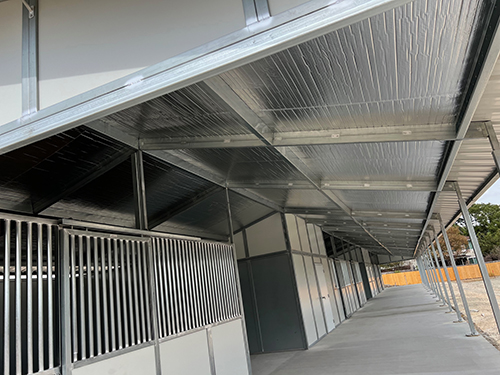
The 'Black Globe' Effect on Humans and Livestock
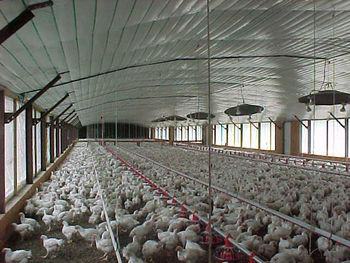
Reflects Infrared Heat Waves
Blocks the 'Black Globe' Effect
In temperatures exceeding 78°F, animals absorb a tremendous increase in radiant energy. Even indoors, the heat felt on the animal can be 10°F to 20°F higher than the ambient air temperature.
Eliminating this effect with reflective foil insulation shows immediate results: up to a 10% increase in dairy milk production, nearly 24% improved conception rates, and significantly reduced death losses from heat stress.

Warehouse Productivity Loss
from Excessive Heat
Excessive heat in unconditioned warehouses drops worker productivity. Studies show 80°F is the critical threshold where cognitive and physical performance begins to decline rapidly.
Productivity drops roughly 2% to 3% for every degree the temperature climbs above 80°F. At 85°F, productivity drops by 18% while error rates spike by 40%; at 90°F, errors can skyrocket by up to 300%.
Indoor warehouse heat traps humidity and lacks natural wind relief, accelerating dehydration and physical fatigue.

People Also at Risk
Inside Animal Production Facilities
The 'Black Globe' Effect refers to radiant heat hitting dark surfaces, raising thermal load on humans, accelerating fatigue, dehydration, and heat exhaustion risks.
Direct radiant energy forces the cardiovascular system to work harder to pump blood to the skin, drastically increasing sweat rates and internal heat strain.
High radiant loads lower productivity and increase error rates. Unchecked exposure combined with humidity can rapidly escalate into fatal heatstroke.